The growing interest in sustainable living has brought the question, "Are container houses environmentally friendly?" to the forefront. According to a 2021 report by the World Green Building Council, buildings contribute to 39% of global carbon emissions. In this context, container houses offer a potential solution. They utilize repurposed shipping containers, thereby reducing waste in landfills.
While container houses can minimize carbon footprints, their impact isn't universally positive. Research shows that insulation and energy efficiency are often overlooked in these structures. A poorly designed container house may lead to higher energy consumption, offsetting its environmental benefits. Moreover, availability of materials and local building regulations can pose challenges.
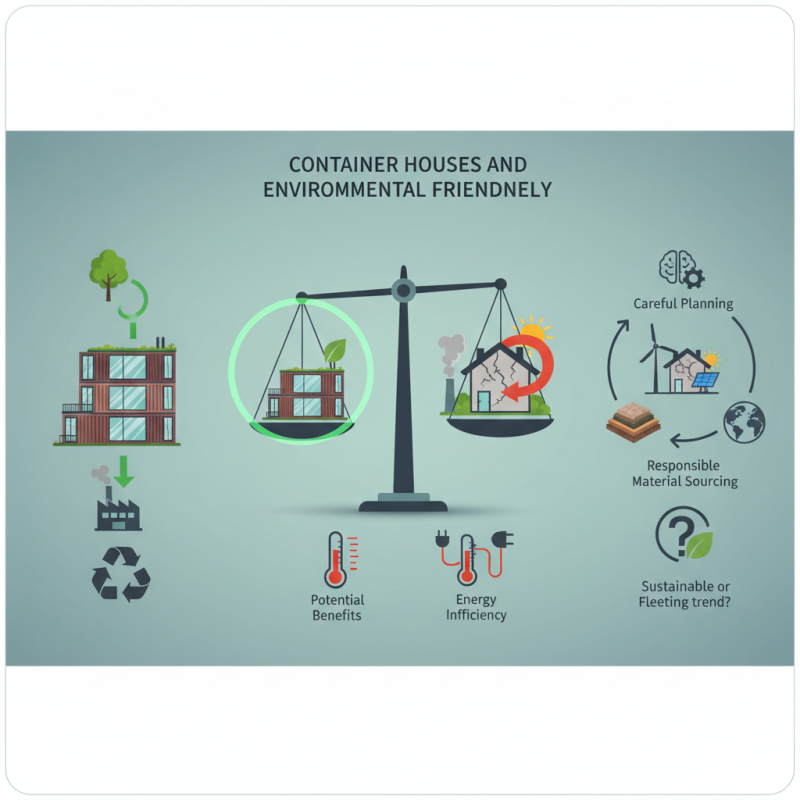
Experts point out that while container homes can be eco-friendly, they require careful planning. Data from the Global Alliance for Building and Construction indicates that we must prioritize energy efficiency and material sourcing to fully realize their potential. This leads to a crucial reflection: Are container houses genuinely sustainable, or do they remain a fleeting trend in the green building movement?
The Environmental Impact of Container Houses Compared to Traditional Homes
Container houses have gained popularity as sustainable alternatives in the housing market. Their construction often utilizes repurposed shipping containers, reducing the demand for new materials. According to a report by the U.S. Green Building Council, these structures can yield up to 30% less carbon emissions during their lifecycle compared to traditional brick and mortar homes. However, there are concerns about the long-term environmental impact of the coatings and insulation materials used to make containers livable.
While container homes have lower initial carbon footprints, certain drawbacks exist. For instance, their thermal efficiency can often be subpar unless properly insulated. A study by the National Institute of Standards and Technology indicated that poorly insulated container homes could lead to increased energy consumption for heating and cooling. This could offset environmental benefits, raising questions about their overall sustainability.
Tips: Consider the energy efficiency of your design when thinking about a container home. Look for insulation materials that are eco-friendly. Also, research local regulations regarding container homes. They can vary widely and might affect your project’s viability or sustainability.
Recycling and Upcycling: The Sustainable Materials in Container Houses
Container houses have gained popularity as sustainable living solutions. They often utilize recycled shipping containers, reducing waste. This process not only minimizes landfill burden but also redefines how we can use materials. By transforming containers into homes, we tap into resources that might otherwise go unused.
Recycling and upcycling are key to making these homes eco-friendly. Many builders repurpose old materials alongside container structures. For example, reclaimed wood can create warm interiors, while salvaged windows add character and charm. This creative reuse not only lowers material costs but also introduces unique designs. However, challenges persist. Sourcing materials can be inconsistent, affecting quality. Additionally, the initial cost may deter some homeowners.
While container houses represent an innovative approach, the environmental impact depends on material choices and construction methods. Using energy-efficient appliances can further enhance sustainability. There are unanswered questions about long-term durability and potential health effects of certain materials. Reflecting on these factors is essential for ensuring that container houses truly serve as a viable green alternative.
Energy Efficiency: How Container Houses Utilize Resources Efficiently
Container houses are gaining popularity for their potential to be energy-efficient. These unique homes repurpose shipping containers, reducing waste while creating modern living spaces. They often have excellent insulation, which helps maintain comfortable indoor temperatures. This leads to lower energy costs across seasons.
Using solar panels is a practical way to enhance energy efficiency. These systems can significantly reduce reliance on traditional power sources. However, not all locations get ample sunlight year-round. Homeowners should evaluate their specific environment before investing.
Additionally, rainwater harvesting can further boost sustainability. It captures rainfall for use in irrigation and plumbing. This practice is becoming more common in container homes, promoting efficient water use. Homeowners must also consider the initial costs and potential maintenance challenges of such systems. Balancing eco-initiatives with everyday practicality is crucial for long-term success.
Overall Carbon Footprint: Analyzing Emissions in Container House Construction
Container houses are often seen as a sustainable alternative to traditional homes. However, analyzing the overall carbon footprint in their construction reveals mixed results. While shipping containers are largely made from recycled steel, the energy used in modifying and transporting them can be significant. A 2019 report from the International Renewable Energy Agency (IRENA) noted that construction-related emissions account for nearly 11% of total global greenhouse gas emissions.
The transformation process of container homes typically involves cutting, welding, and insulating. Each of these steps can add substantial emissions to the construction phase. For instance, a study published by the Global Alliance for Buildings and Construction highlighted that the energy consumption for retrofitting a single container can exceed 1,800 kilowatt-hours. This figure underscores the need for careful planning and energy-efficient practices during construction.
Additionally, while container homes can be more affordable, their long-term viability and sustainability depend on various factors. Local regulations can hinder their widespread adoption. Furthermore, the life cycle impact remains debated. Some argue that containers may not achieve their full potential without integrating renewable energy sources and sustainable design principles. It's essential to reflect on these challenges as we discuss the environmental benefits of container houses.
Are Container Houses Environmentally Friendly Solutions? - Overall Carbon Footprint: Analyzing Emissions in Container House Construction
| Aspect |
Emission (CO2e in kg) |
Percentage of Total |
| Material Production |
6500 |
32% |
| Transportation |
2500 |
12% |
| Construction Process |
4000 |
20% |
| Operational Energy Use |
8000 |
36% |
| Total |
22500 |
100% |
Cost-Effectiveness and Long-Term Sustainability of Container House Living
Container houses are gaining attention for their innovative approach to sustainable living. According to the *International Journal of Environmental Science & Technology*, these homes can reduce carbon footprints significantly. A study found that using a repurposed shipping container can lower emissions by up to 66% compared to traditional houses. This factor, combined with durable materials, suggests they may offer long-term sustainability.
Financially, container homes can be cost-effective. The average cost to convert a shipping container into a livable space can range from $10,000 to $35,000. This is often cheaper than conventional building methods. However, homeowners must consider potential hidden costs. Permit fees and site preparation can add significant expenses. Furthermore, the resale value of container homes is still uncertain. Limited market data makes it hard to predict long-term investment returns.
While the design is appealing, it's important to consider drawbacks. Insulation and ventilation are crucial in container homes, yet not always adequately addressed. Poor insulation can lead to high energy bills, contradicting the eco-friendly appeal. Ongoing maintenance can be a challenge too. Rust and structural issues can arise if not managed correctly. These aspects underscore the need for thoughtful planning in embracing container house living.
Cost-Effectiveness and Long-Term Sustainability of Container House Living
FAQS
: Container houses are primarily made from recycled shipping containers. This reduces waste and landfill burdens.
Recycling and upcycling old materials create eco-friendly homes. Reclaimed wood and salvaged windows add unique designs.
Yes, sourcing materials can be inconsistent. This affects the quality and availability of building components.
The carbon footprint varies. Modifying and transporting containers can produce significant emissions during construction.
Retrofitting a single container can exceed 1,800 kilowatt-hours of energy. This highlights the planning needed for sustainability.
Yes, using energy-efficient appliances can enhance sustainability. They contribute to reducing the overall environmental impact.
Various factors, including local regulations and material choices, influence sustainability. There's a need for sustainable design integration.
Container houses can be green, but we must reflect on material choices and their environmental impact.
Long-term health effects of certain materials are still unclear. It's essential to consider this in design decisions.
Prioritize energy-efficient practices and mindful material selections. Reflecting on these challenges can lead to better solutions.
Conclusion
Container houses have garnered attention for their potential as sustainable living solutions, prompting the question: are container houses environmentally friendly? The environmental impact of these structures is significantly lower compared to traditional homes, primarily due to their use of recycled shipping containers, which helps reduce waste. By incorporating sustainable materials through recycling and upcycling, container houses promote a more circular economy.
Moreover, many container houses utilize energy-efficient designs and resources, minimizing energy consumption over their lifetime. An analysis of the overall carbon footprint reveals that the construction and operation of container houses can lead to reduced emissions. Additionally, their cost-effectiveness and long-term sustainability further support the argument that container houses present a viable environmentally friendly alternative to conventional housing, making them an appealing choice for eco-conscious consumers.

 KS Housing