How to Insulate a Container House for Ultimate Comfort?

Time:2026-05-11 Author:Mason
0%

Living in a container house presents unique challenges, especially when it comes to insulation. Proper insulation is crucial for comfort and energy efficiency. Many overlook the need to learn how to insulate a container house properly before moving in. Without effective insulation, these homes can become unbearably hot in the summer and freezing in the winter.

Insulating a container house involves several methods and materials. Each choice can impact your home’s efficiency and comfort. Some methods may seem effective initially, but issues can arise. For instance, improper sealing can lead to moisture buildup, resulting in mold. Details like the type of insulation material and installation technique make a significant difference. Homeowners should consider these factors carefully.

Moreover, working with experts is beneficial. Their knowledge can help identify the best solutions for your specific climate and location. Think about the long-term results and potential pitfalls. It’s important to ask questions and reflect on previous insulation experiences. Ensuring that your container house is well insulated will enhance your living experience significantly.
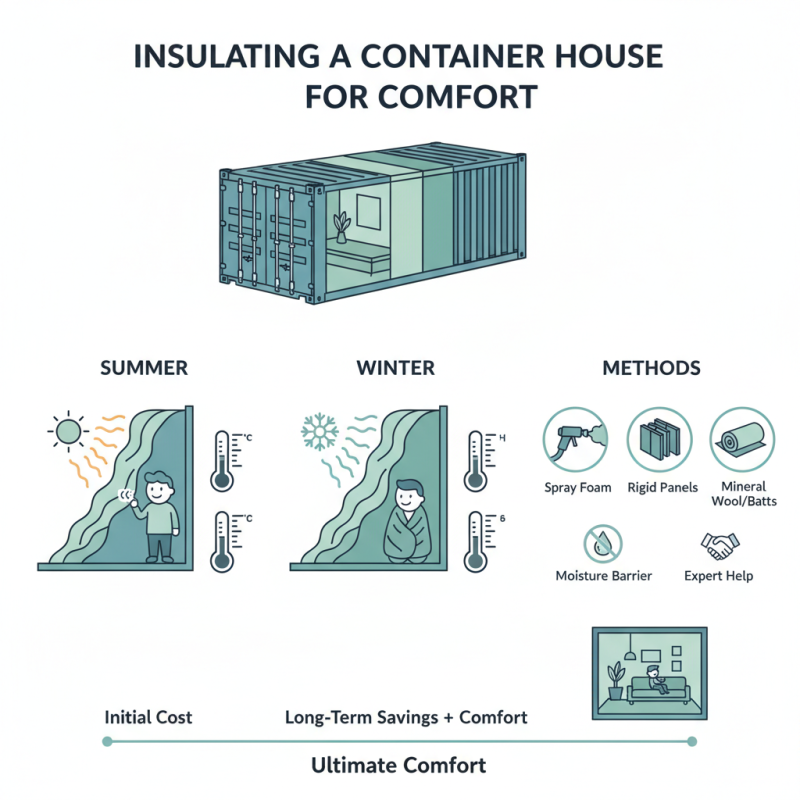
How to Insulate a Container House for Ultimate Comfort?

Choosing the Right Insulation Material for Container Homes

Choosing the right insulation material for container homes is vital for comfort. Container houses often face extreme temperature fluctuations. According to the Department of Energy, proper insulation can reduce energy needs by up to 40%. This is crucial for maintaining a stable indoor climate.

Foam board and spray foam are popular choices. They provide high R-values, offering excellent thermal resistance. The R-value represents the insulation's effectiveness. For instance, closed-cell spray foam boasts an R-value of 6 to 7 per inch. This means it can significantly reduce heat transfer. However, these materials can come at a higher initial cost.

Natural insulation options, like cellulose or wool, are eco-friendly. They perform well in regulating humidity. Yet, their R-values are typically lower, ranging from 3.6 to 4.0. This can lead to increased heating and cooling costs. Builders should weigh these factors carefully. Choosing the wrong insulation can impact comfort and energy efficiency, which is not ideal.

Understanding Thermal Performance and Energy Efficiency

When considering the thermal performance of a container house, insulation choices significantly impact energy efficiency. Studies reveal that nearly 30% of energy loss in buildings occurs through uninsulated walls and roofs. Proper insulation can mitigate these losses, keeping indoor temperatures stable. For example, using high-performance insulation materials can reduce heating and cooling demands by up to 40%.

Container houses often face unique challenges, such as metal's high thermal conductivity. This can lead to extreme temperature fluctuations. According to the U.S. Department of Energy, insulated walls can effectively combat this issue. Sprayed foam insulation fits well within the container's structure, providing a seamless barrier against heat loss. This method not only enhances thermal resistance but also adds durability.

However, balancing insulation thickness and internal space can be tricky. Excessive insulation may reduce usable area, leading to design limitations. Furthermore, while installing insulation, attention to sealing gaps is crucial. Unsealed joints can undermine insulation efforts, leading to drafts. Ultimately, effective insulation requires careful consideration and planning to achieve optimal comfort and energy efficiency.

Sealing Gaps and Cracks for Optimal Insulation

Sealing gaps and cracks in a container house is essential for maximizing insulation. Even small openings can cause significant heat loss. Start by inspecting the entire structure, focusing on seams, joints, and areas around windows or doors. These spaces often allow cold drafts to enter and warm air to escape. A simple visual check can reveal much. Remember, it's okay if you miss a few spots initially; the goal is to find and mend them over time.

Utilize foam sealants or weatherstripping materials to close these gaps effectively. These materials expand to fill voids and create a tighter seal. In some cases, you might notice that certain areas still allow air exchanges. It's a reminder that ongoing maintenance is necessary. Regularly re-evaluating your home’s insulation can reveal new weaknesses as environmental conditions change.

Consider caulking as an efficient solution for smaller cracks. It’s an easy DIY task that requires minimal tools. However, don't rush it! Take your time to ensure proper application. Reflect on the areas where insulation could be lacking. Are you overlooking unsealed outlets or vents? Paying attention to those details can significantly enhance your home's comfort. Remember, creating an insulated home is a continuous journey, not a one-time fix.

How to Insulate a Container House for Ultimate Comfort?

Insulation Material R-Value Pros Cons
Spray Foam Insulation 6-7 Excellent air sealing, high R-value Higher cost, professional installation required
Fiberglass Batts 3-4 Cost-effective, easy to install Air leakage, requires vapor barrier
Rigid Foam Insulation 5-6 High insulating value, moisture resistant Can be expensive, requires careful cutting
Mineral Wool (Rock Wool) 3-4 Fire resistant, soundproofing qualities Can be less efficient than other options

Ventilation Strategies to Maintain Comfortable Indoor Air Quality

Proper ventilation is crucial for maintaining comfortable indoor air quality in a container house. According to the World Health Organization, indoor air pollution can significantly impact health and well-being. Poor air circulation can lead to a build-up of allergens, toxins, and moisture. This makes it essential to design effective ventilation strategies for container homes.

To achieve optimal ventilation, consider mechanical systems such as energy recovery ventilators or heat recovery ventilators. These systems exchange stale indoor air with fresh outdoor air while minimizing energy loss. A report from the US Department of Energy shows that properly installed and maintained ventilation systems can improve indoor air quality by up to 80%. It's important to regularly inspect these systems to ensure they operate efficiently.

Natural ventilation can also play a significant role. Opening strategically placed windows can enhance airflow. However, relying solely on this can be risky, especially in extreme weather conditions. A study published in the Journal of Building Performance found that a balanced approach combining both mechanical and natural ventilation often produces the best outcomes. It's essential to evaluate the unique needs of your container home, ensuring you have a well-rounded strategy for maintaining air quality and comfort.

Finishing Touches: Interior Design Considerations for Insulation

In designing a container house, insulation is key for comfort. Consider the materials: fiberglass, foam board, or spray foam. Each has its benefits. Fiberglass is cost-effective but can be less efficient at insulating cold temperatures. Foam board offers better thermal resistance.

Interior design plays a crucial role in enhancing insulation. Use rugs and drapes to improve warmth. Thick textiles can trap air, creating a barrier against temperature fluctuations. Research indicates that using thermal curtains can reduce heat loss by up to 25%. Reflect on how these choices in fabric and color affect energy consumption.

Don't overlook the layout of your space. Rooms should be oriented toward the sun for natural heating. A well-placed window can enhance passive solar gain. However, improper placement may cause overheating. It's essential to find the right balance. For many, this is a learning process, where adjustments over time lead to greater comfort and efficiency.

Insulation Material Effectiveness in Container Houses

FAQS

: How does insulation impact energy efficiency in container houses?

: Insulation choices significantly affect energy efficiency, potentially reducing heating and cooling demands by up to 40%.

What challenges do container houses face regarding temperature?

Metal's high thermal conductivity can cause extreme temperature fluctuations inside container houses.

What is a recommended insulation method for container houses?

Sprayed foam insulation fits well within the structure, creating a seamless barrier against heat loss.

Why is sealing gaps and cracks important for insulation?

Even small openings can lead to significant heat loss, compromising the overall energy efficiency of the home.

What should you use to seal gaps in a container house?

Foam sealants or weatherstripping materials are effective for closing gaps and creating a tight seal.

How can you enhance insulation with interior design?

Using thick rugs and thermal curtains can improve warmth and reduce heat loss by up to 25%.

What maintenance is needed for insulation?

Regular inspections and re-evaluations are necessary to find and mend new weaknesses as conditions change.

How does room orientation affect energy efficiency?

Rooms oriented toward the sun can enhance natural heating, but improper placement may cause overheating.

What materials can be used for insulation in a container house?

Common materials include fiberglass, foam board, and spray foam, each offering different benefits.

Is achieving optimal insulation a one-time fix?

No, creating an insulated home is a continuous journey requiring ongoing attention and adjustments.

Conclusion

Insulating a container house properly is essential for achieving maximum comfort and energy efficiency. The process begins with choosing the right insulation materials, which can significantly impact thermal performance. Understanding how different materials respond to temperature fluctuations is crucial in creating a cozy living environment.

Next, sealing any gaps and cracks is vital to ensure optimal insulation, preventing heat loss during the winter and keeping the interior cool in the summer. Additionally, implementing effective ventilation strategies maintains comfortable indoor air quality, allowing for a sustainable living space. Finally, attention to interior design can complement insulation efforts, creating a harmonious and functional atmosphere in your container home. By following these steps, you can effectively insulate your container house for ultimate comfort.

Mason

Mason

Mason is a seasoned marketing professional with a deep expertise in the company's offerings and a passion for driving brand awareness. With a strong background in digital marketing strategies, he has an innate ability to connect with diverse audiences and effectively communicate product benefits.......