The topic of prefab houses has gained traction in recent years, especially in the context of extreme weather events. As climate change leads to more severe storms and temperatures, the question arises: are prefab houses resistant to extreme weather? Dr. Karen Easton, a leading expert in sustainable building practices, emphasizes, “Prefab homes can be designed for resilience, but not all are equal in performance.” This highlights the variability in quality and design among prefab structures.
Many people are drawn to the idea of prefab homes due to their affordability and speed of construction. However, their capacity to withstand the elements remains a critical concern. Some prefab designs incorporate advanced materials and engineering that enhance durability. Others may fall short, lacking the necessary reinforcements for severe weather conditions.
The challenge lies in choosing the right prefab home. Factors like insulation, roofing materials, and overall design play crucial roles in determining a home’s resistance to extreme weather. Homebuyers should research thoroughly, seeking expert advice. Not all prefab houses are independently tested for resilience. Understanding these nuances helps ensure that ideal safety standards are met. Awareness and informed decisions are key in selecting the best option.
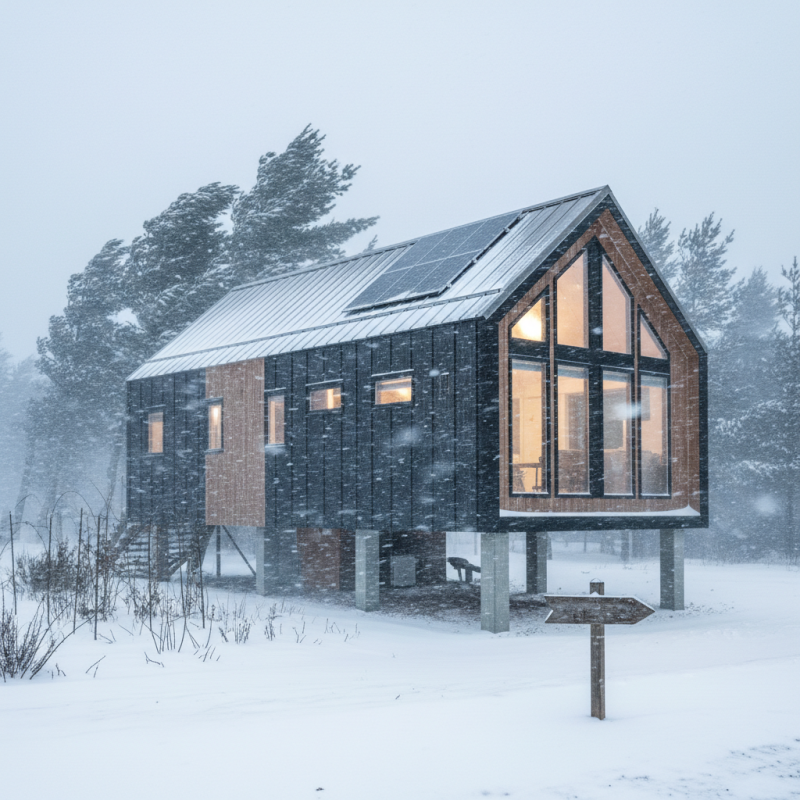
Prefab houses have gained popularity due to their quick assembly and efficiency. They come in various designs and materials, which affect their durability. Understanding the construction techniques is essential for assessing their performance in extreme weather conditions.
Many manufacturers use steel frames and insulated panels. These materials can resist high winds and offer better insulation against heat and cold. According to a report from the National Institute of Standards and Technology, buildings designed with modern prefab techniques are more resilient against harsh climates. Still, not all prefab homes are built equally; some may not withstand heavy snow loads or intense storms.
Tips: Regular maintenance is key. Inspect the roof and seals annually. This prevents damage from moisture. Choose a design that suits your local climate. Consider using impact-resistant materials for areas prone to severe weather. Ensure your prefab home includes proper anchoring for wind resistance. Reflect on your area’s specific risks—from flooding to hurricanes—and make informed choices.
Prefab houses have gained popularity due to their cost-effectiveness and speedy construction. However, their durability in extreme weather conditions raises concerns. Research published by the National Institute of Standards and Technology indicates that prefab houses can withstand wind speeds of up to 150 mph when constructed with the right materials. This data is crucial for homeowners in hurricane-prone areas.
Structural integrity is vital for prefab houses. According to the Building Research Establishment, a well-designed prefab can endure heavy snowfall without compromising safety. Yet, not all manufacturers adhere to these standards. Homeowners must ensure compliance with local building codes. The lack of uniformity in materials can lead to vulnerabilities.
Extreme weather events are becoming more frequent due to climate change. A report from the National Oceanic and Atmospheric Administration highlights a 25% increase in severe storms over the last decade. This trend necessitates rigorous testing and validation for prefab housing. Use of resilient materials like steel and reinforced concrete is encouraged. Yet, many prefab homes still rely on traditional materials. The gap between innovation and implementation needs addressing to ensure longevity against nature's wrath.
The durability of prefab houses in extreme weather hinges significantly on their material properties. Each material has unique strengths and weaknesses, directly impacting how well a structure can withstand harsh conditions. For instance, insulated panels may offer good thermal performance but fall short against high winds. On the other hand, steel frames provide robust strength but can suffer from corrosion in humid environments. Building materials often determine a home's longevity and resilience.
Composite materials and treated woods provide a blend of benefits. They resist moisture and can handle varying temperatures effectively. Yet, not all composites perform equally. Some may degrade faster in severe weather, requiring regular maintenance and inspection. A thorough understanding of these materials helps builders make informed decisions. The right choices can lead to long-lasting homes, while poor selections can lead to costly repairs.
The goal is to create durable housing that delivers safety and comfort. Each design and material choice should reflect the local climate, risks, and long-term viability. Many builders still overlook essential studies of material performance. This gap in knowledge could cost homeowners dearly in the long run. A proactive approach is crucial for avoiding issues later on.
| Material | Durability Rating | Weather Resistance | Maintenance Requirement |
|---|---|---|---|
| Steel | High | Excellent | Low |
| Wood | Medium | Moderate | Medium |
| Concrete | High | Excellent | Low |
| Plastic | Medium | Good | Low |
| Composite | High | Excellent | Medium |
Prefab houses have been increasingly scrutinized in regions with extreme weather. A 2022 report by the National Association of Home Builders highlights that homes in hurricane-prone areas must withstand winds exceeding 130 mph. Case studies reveal that well-built prefab structures can indeed handle such stresses. For instance, a prefab home in Florida survived Hurricane Irma with minimal damage, showcasing engineered resilience.
In colder climates, like those in northern Canada, prefab houses face challenges with snow load. The Canadian Wood Council notes that roofs should support up to 40 psf of snow. Notably, a prefab project in Alberta utilized advanced insulation techniques, achieving a 30% energy efficiency improvement. However, some homes constructed without proper site assessment faced issues, such as structural weaknesses during snow storms.
While many prefab homes perform well, a few cases highlight areas needing reflection. A study from the University of Florida pointed out that some designs overlooked local weather patterns, leading to condensation issues. Learning from these experiences is vital for future developments. Emphasizing localized design choices can lead to improvements in durability against extreme conditions.
Maintaining and upgrading prefab houses is essential for their durability, especially in extreme weather. The National Association of Home Builders reports that homes, including prefab models, should withstand winds exceeding 140 miles per hour in hurricane-prone areas. This requires careful attention to materials and construction.
Regular maintenance plays a crucial role. Inspecting the structure every season helps identify wear and tear. For instance, sealing gaps and cracks can prevent moisture intrusion, which can weaken foundations over time. Replace weathered siding to enhance insulation and durability against harsh climates.
Tip: Consider adding fortified insulation. Studies suggest houses with high-quality insulation reduce energy costs by up to 30%. Additionally, installing storm shutters protects windows from flying debris during severe storms. This small upgrade can significantly enhance safety and performance under pressure.
Ultimately, while prefab houses can perform well in extreme conditions, their longevity relies on diligent upkeep and timely upgrades. Reflecting on maintenance practices is vital for ensuring they meet safety standards in unpredictable weather.
: Prefab houses are structures built off-site and assembled on location. They aim for efficiency and speed in construction.
Well-built prefab houses can withstand extreme weather. Some have survived hurricanes and heavy snowstorms with minimal damage.
Regular maintenance is crucial. Inspecting for wear and tear every season can prevent serious issues over time.
Proper insulation enhances energy efficiency and helps protect against harsh climates. It can reduce energy costs significantly.
Some prefab houses struggled with snow load. Without proper assessment, they faced structural weaknesses during snowstorms.
Homeowners can add fortified insulation and install storm shutters for protection. These upgrades improve performance significantly.
Some designs overlook local weather patterns. This can lead to condensation issues and affect overall durability.
It is advisable to inspect prefab homes every season. Identifying problems early can save on costly repairs later.
Homes must withstand winds over 140 mph. Choosing appropriate materials and construction methods is essential for safety.
Regular maintenance boosts durability and safety. Reflecting on past maintenance practices can guide future improvements.
Prefab houses, constructed using advanced techniques and materials, show promise in withstanding extreme weather conditions. Analyzing their resistance reveals that modern prefabrication methods enhance durability and structural integrity, making them a viable option in regions prone to severe weather events. The material properties of prefab homes, such as insulation and wind resistance, play a crucial role in determining their longevity and resilience.
Case studies from areas that experience harsh climates provide valuable insights into the performance of prefab houses under duress. Additionally, regular maintenance and possible upgrades can significantly improve their durability over time. By understanding these factors, one can better assess whether prefab houses are resistant to extreme weather, ensuring safety and sustainability for occupants in challenging environments.

KS Housing