🔹 Basic Information
Model NO.HYRO 1000L to 50m3/hr
Source WaterSeawater / Salt Water
ApplicationDrinking / Irrigation
Machine NameSeawater Desalination Machine
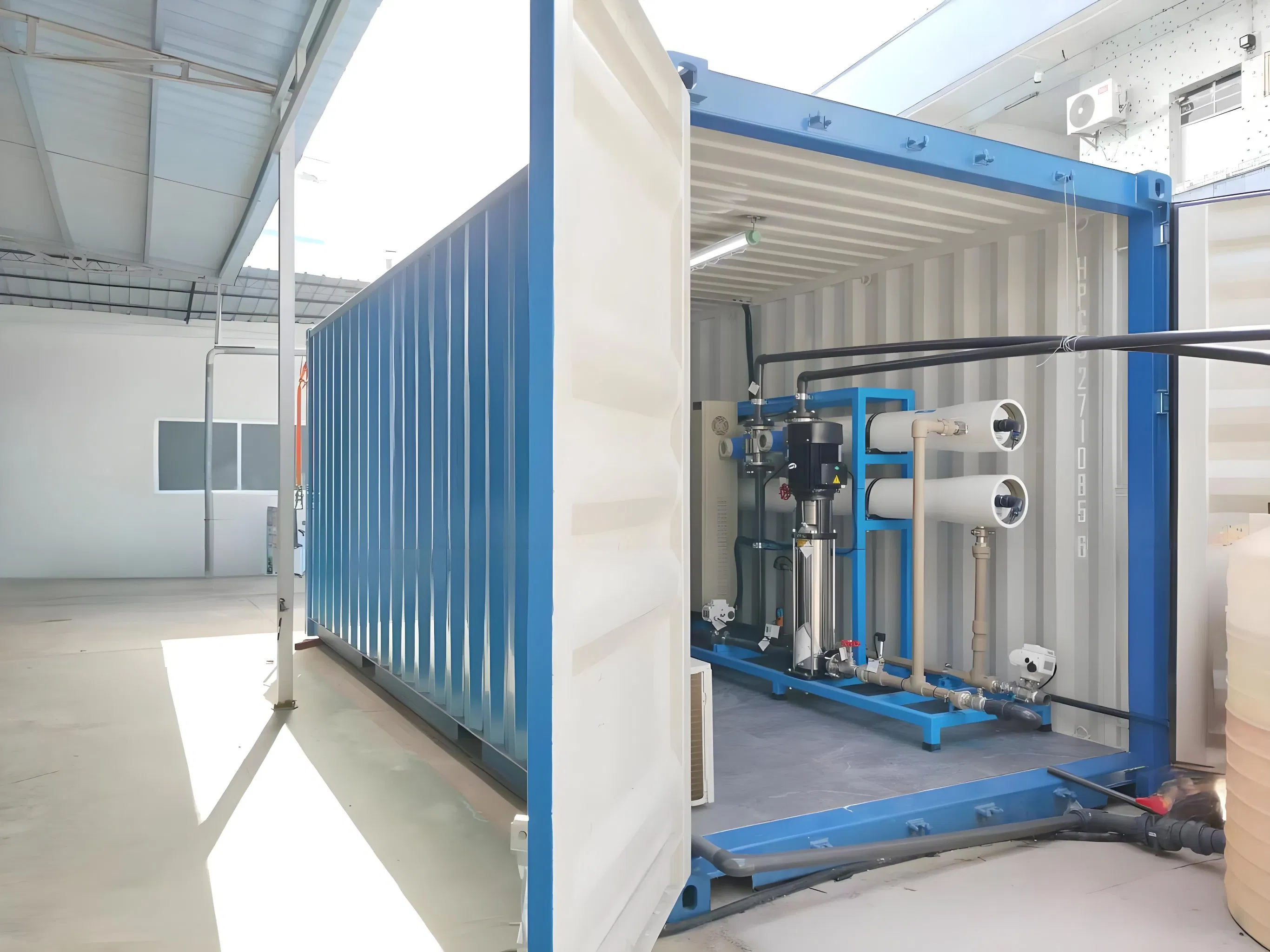
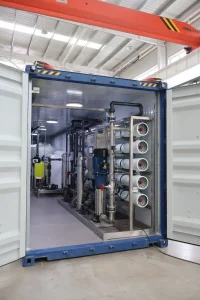
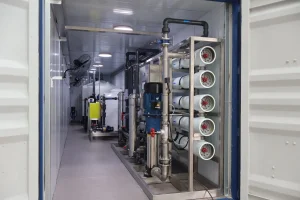
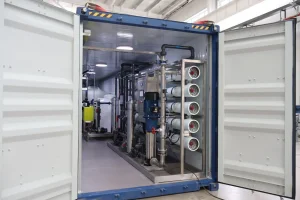
Specification40FT Containerized RO
HS Code842121
Package Size500cm * 100cm * 165cm
Gross Weight600.00kg
🔹 Product Description
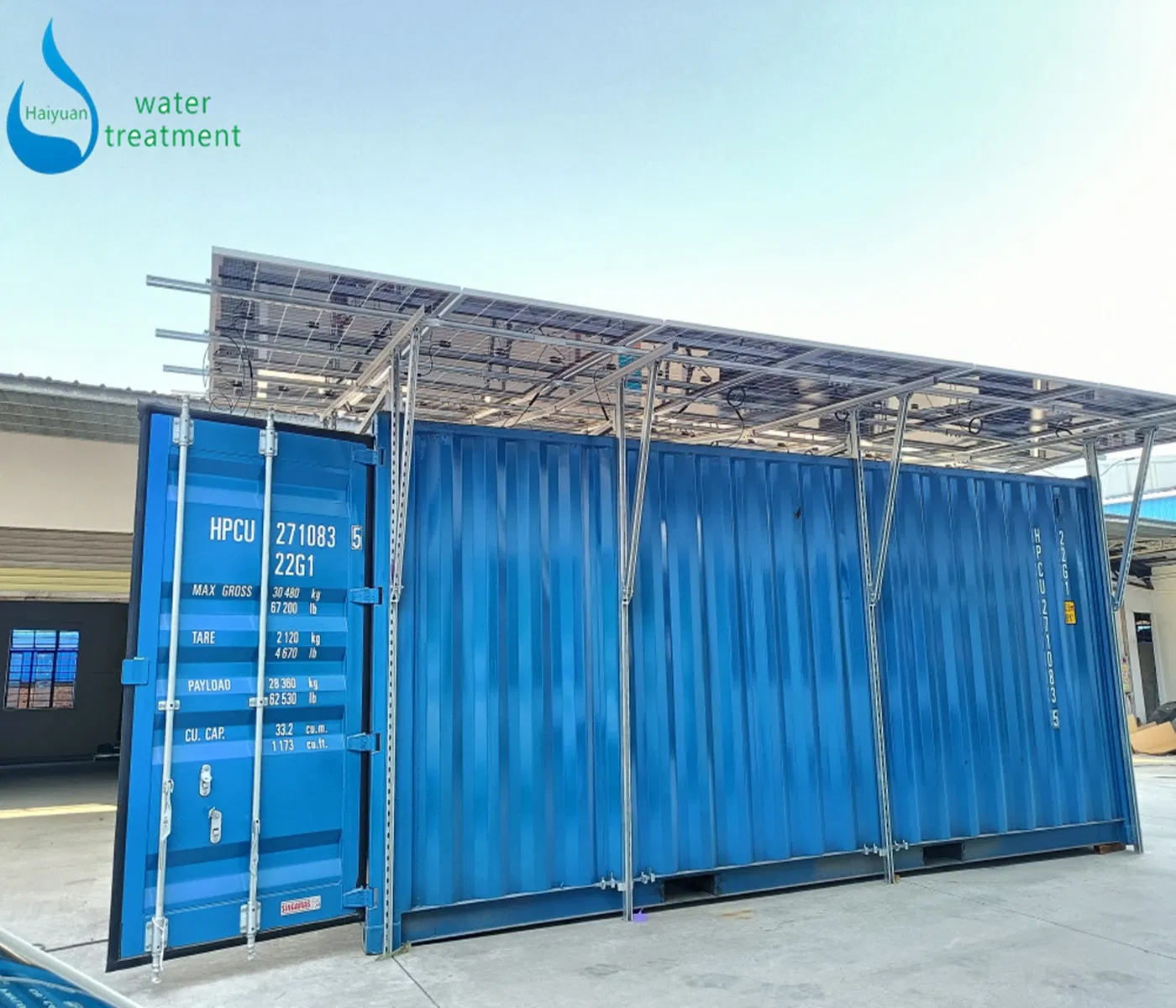
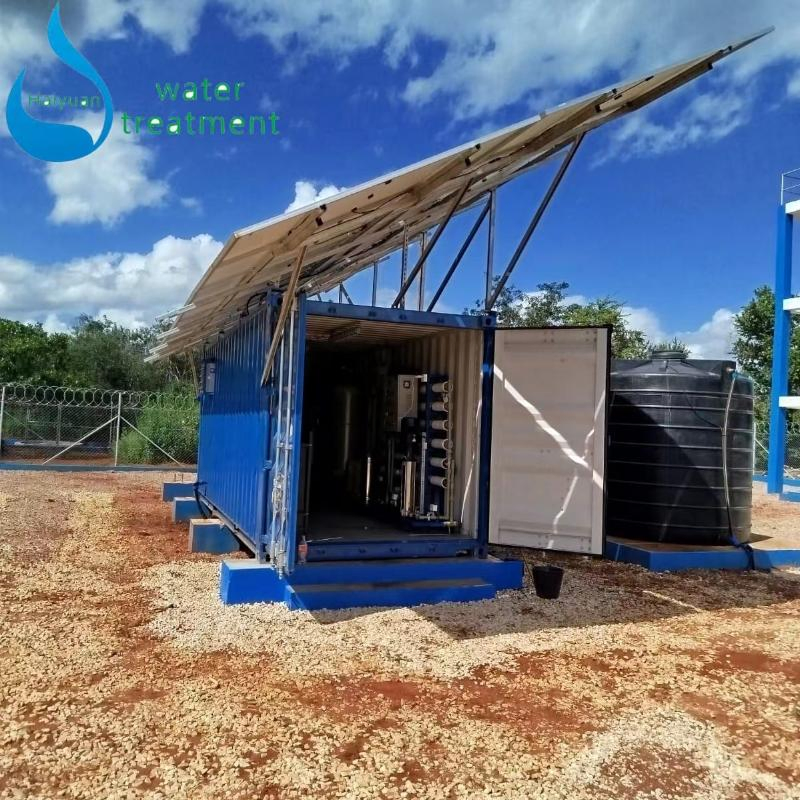
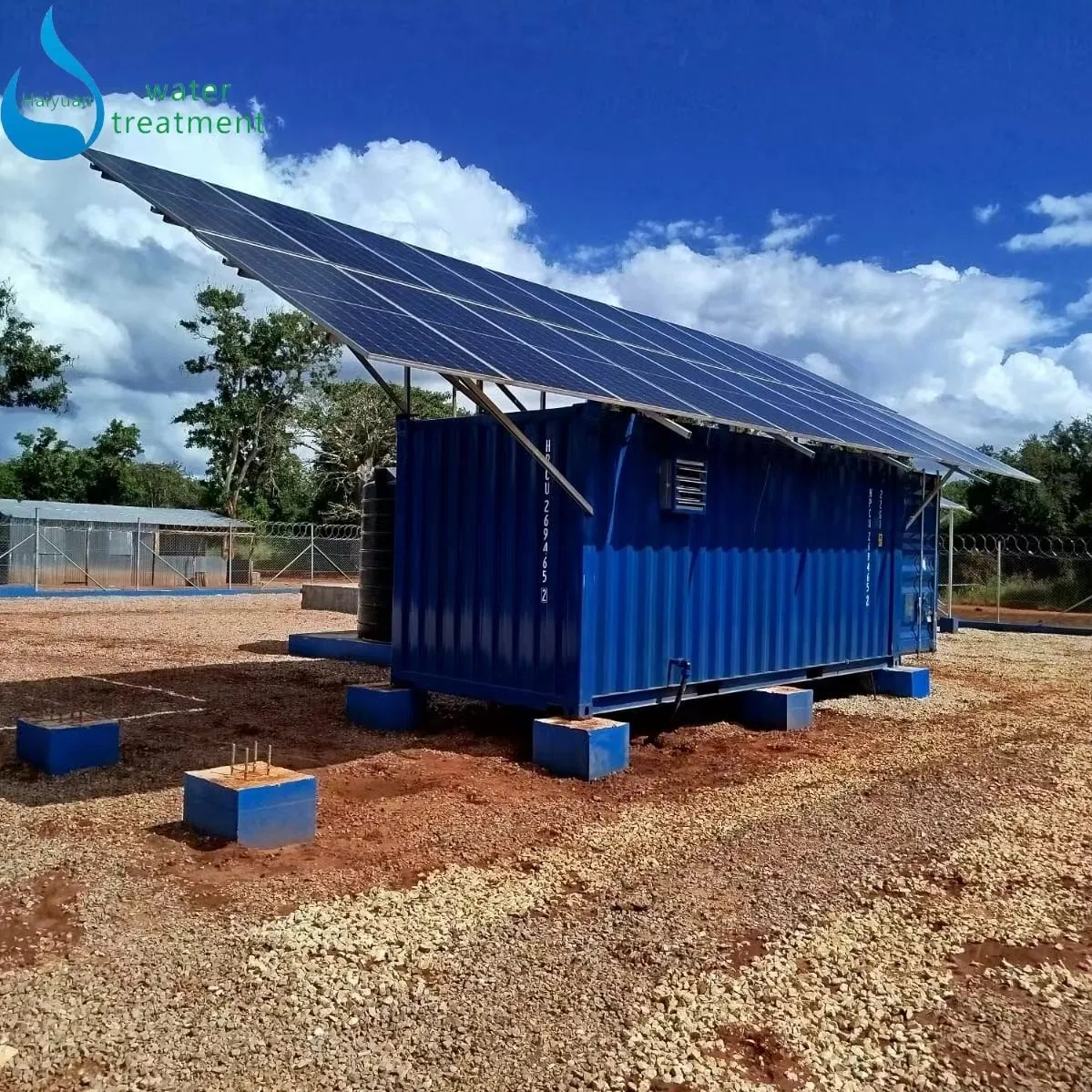
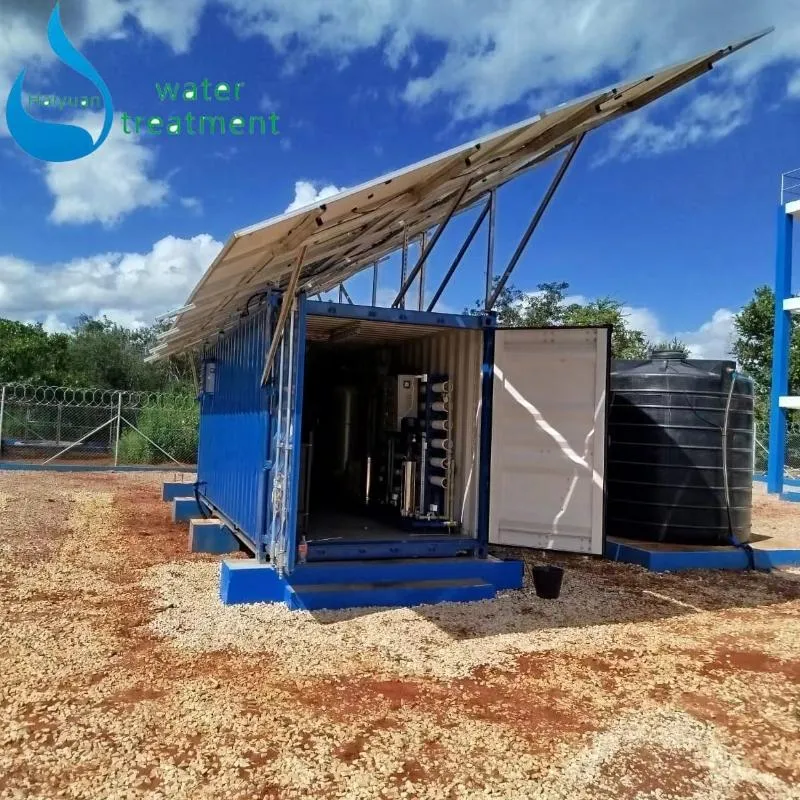
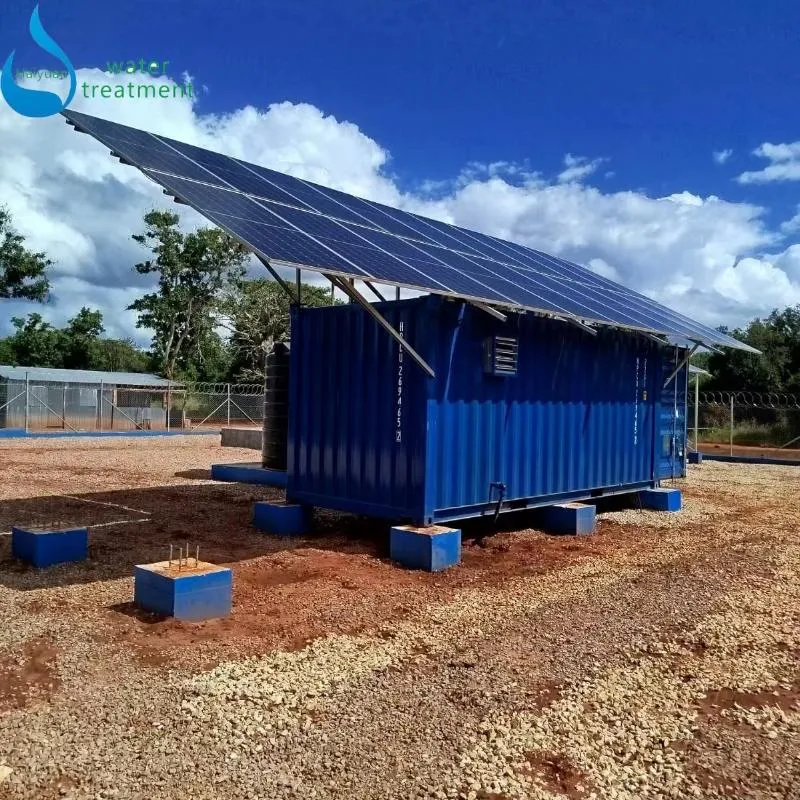
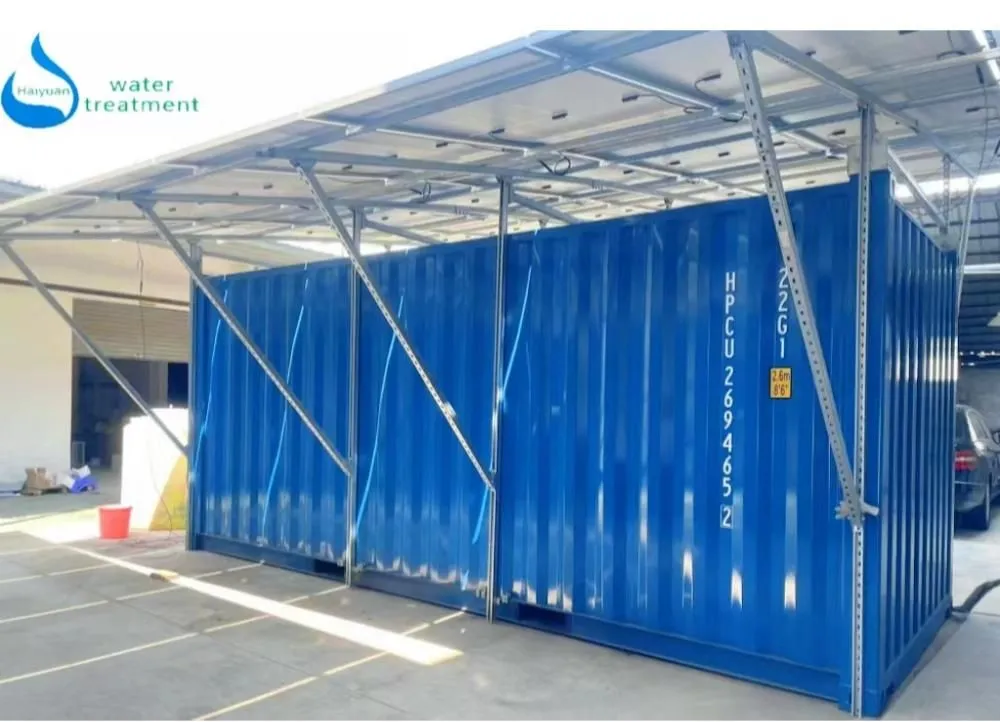
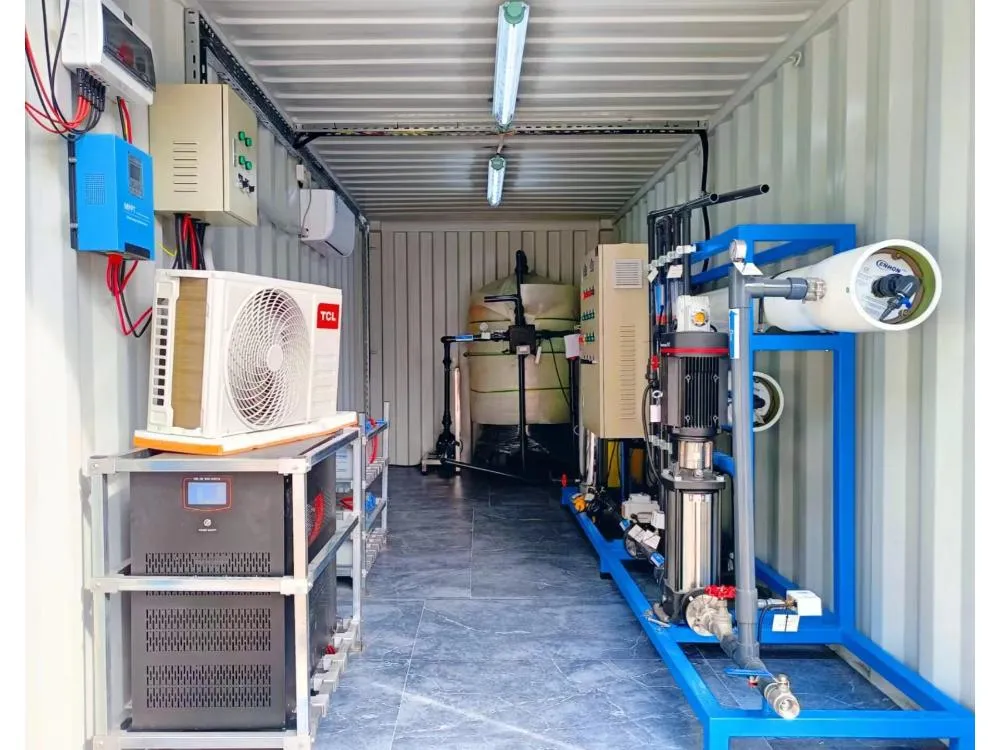
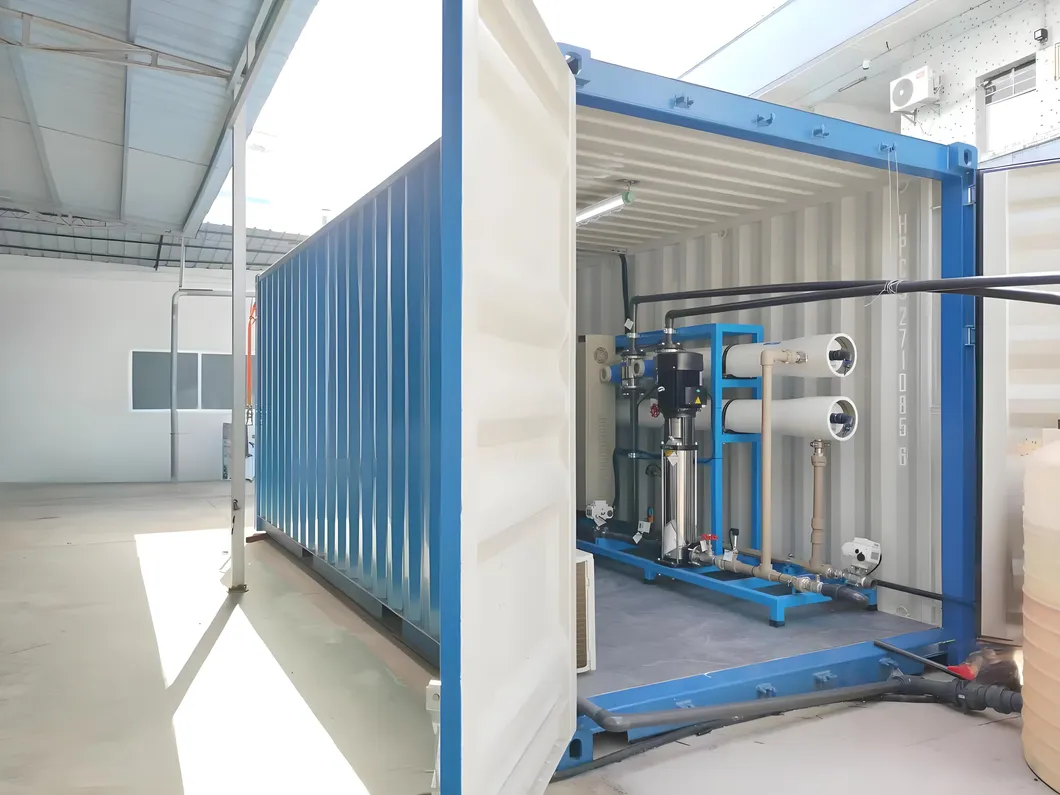
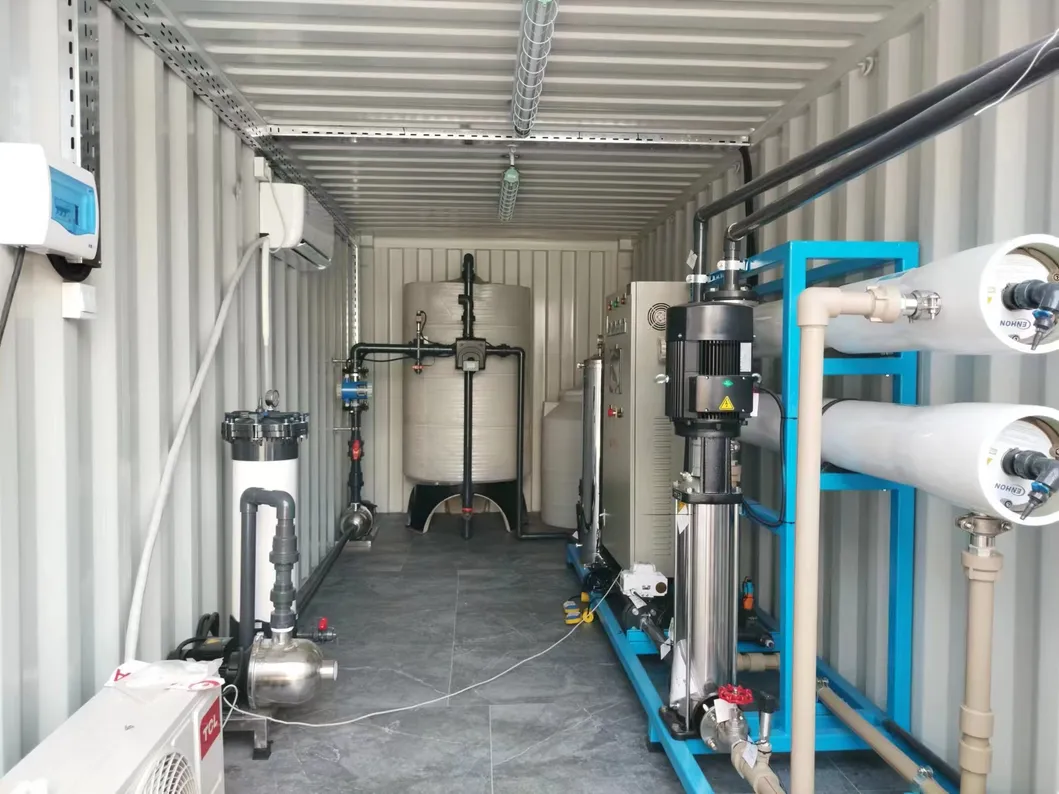
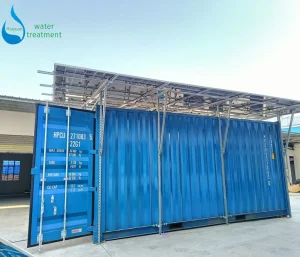
Solar Containerised Water Treatment Plant
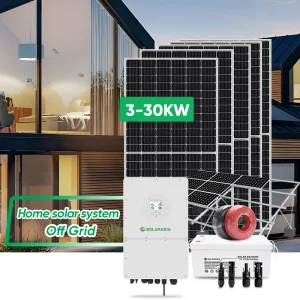
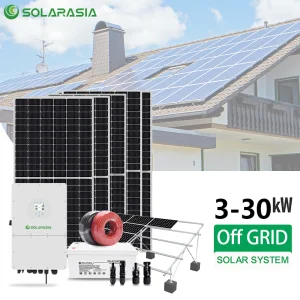
This solar-powered containerized water treatment plant is designed for professional production and high purification standards. Ideal for remote areas, it turns river, lake, or well water into safe drinking water using renewable solar energy. Standard capacities range from 500L/hr to 10T/hr or more depending on specific requirements.
Basic Flow Chart of Solar RO Plant Design:
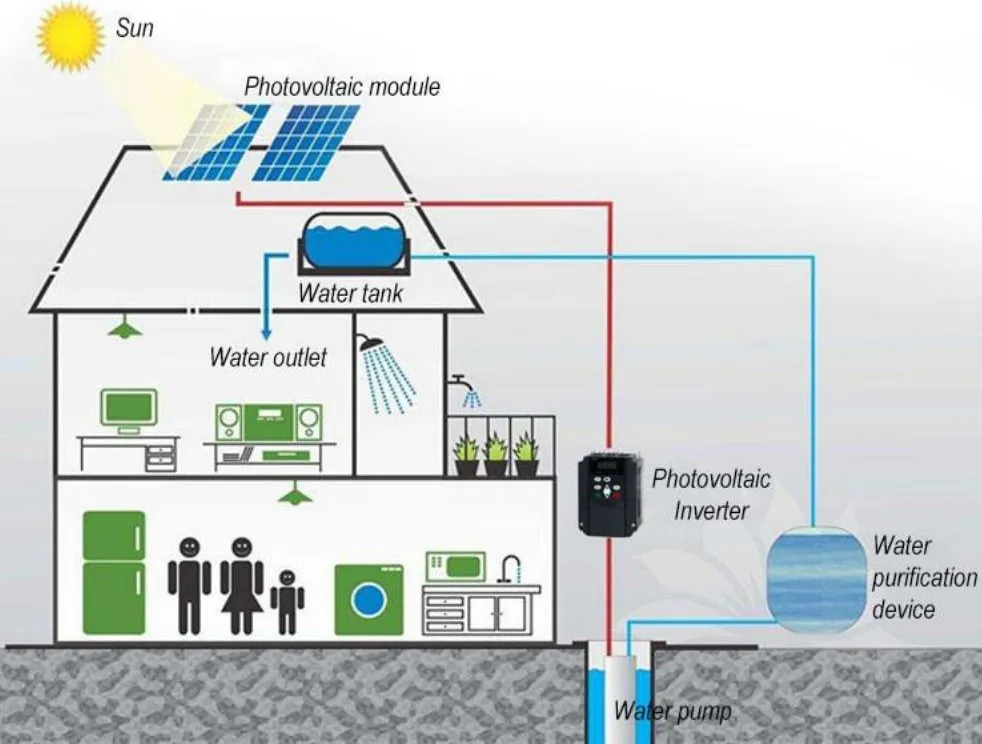
Flow Chart (No Battery)
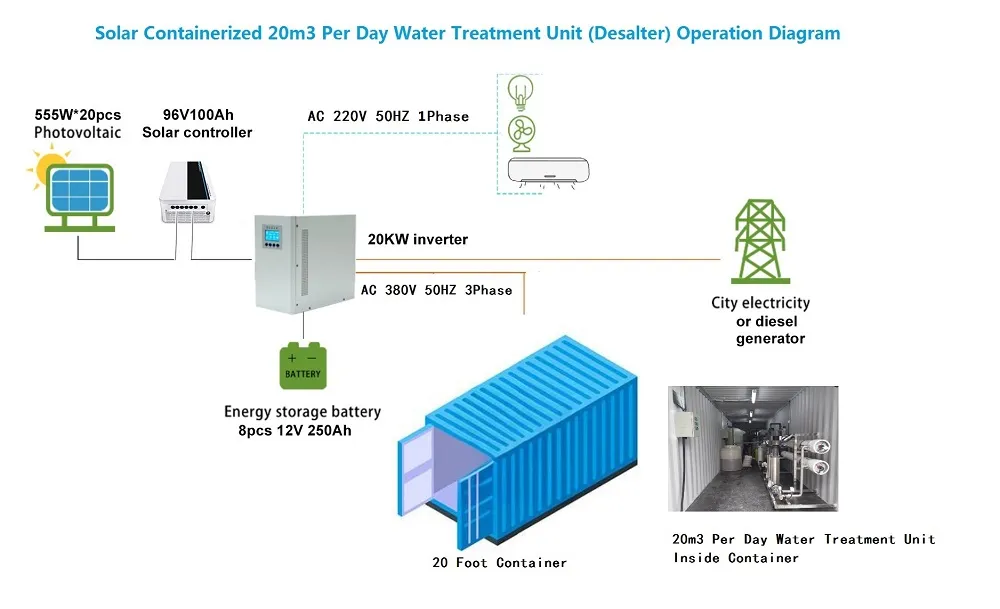
Flow Chart (With Battery)
🔹 Real Project Cases
1. Containerized Solar Powered System 3000L/hr (Mozambique)
| HY-SCRO-3000L/hr (20m³/Day) Specification |
|---|
| Flow Rate | 20m³/day | Recovery Rate | 0.69 |
| Rated Power | 7.5KW | Solar Power | 20KW |
| Solar Panel | 20 pcs | Battery | 8PCS, 24KW |
| Incoming TDS | 2710ppm | Output TDS | 50ppm |
| Container | 20FT | Pressure | 18 bar |
2. Solar Containerized RO Plant 5000L/hr (Congo)
3. Containerized RO Plant 6000L/hr (Australia - Boiler Water)
🔹 System Advantages
- Sturdy Construction: Container shell is flat, durable, and equipped with non-slip floors.
- Easy Mobility: Overall installation and transfer are simple, saving space and onsite labor costs.
- Green Energy: Solar power supply ensures environmental protection and significant electricity cost savings.
- Advanced Filtration: Removes heavy metals, bacteria, and impurities to meet global drinking standards.
- Smart Monitoring: Status can be checked remotely via mobile devices.
🔹 Technical Comparison (Water Quality)
| Source Water Type |
Typical Salinity |
TDS Range (ppm) |
| Tap Water | 0.1-7 mg/l | 100 - 700 |
| Brackish Water | 0.7 - 10 g/l | 700 - 10,000 |
| Estuaries / Northern Sea | 21 g/l | 10,000 - 21,000 |
| Atlantic Ocean | 35 g/l | 35,000 |
| Mediterranean Sea | 38 g/l | 38,000 |
| Arabian Sea | 45 g/l | 45,000 |
🔹 Application Scenarios
📍 Pure Drinking & Mineral Water
📍 Community Living Water
📍 Agriculture & Irrigation
📍 Industrial Boiler Feed Water
📍 Medical & Electronic High-Purity Water
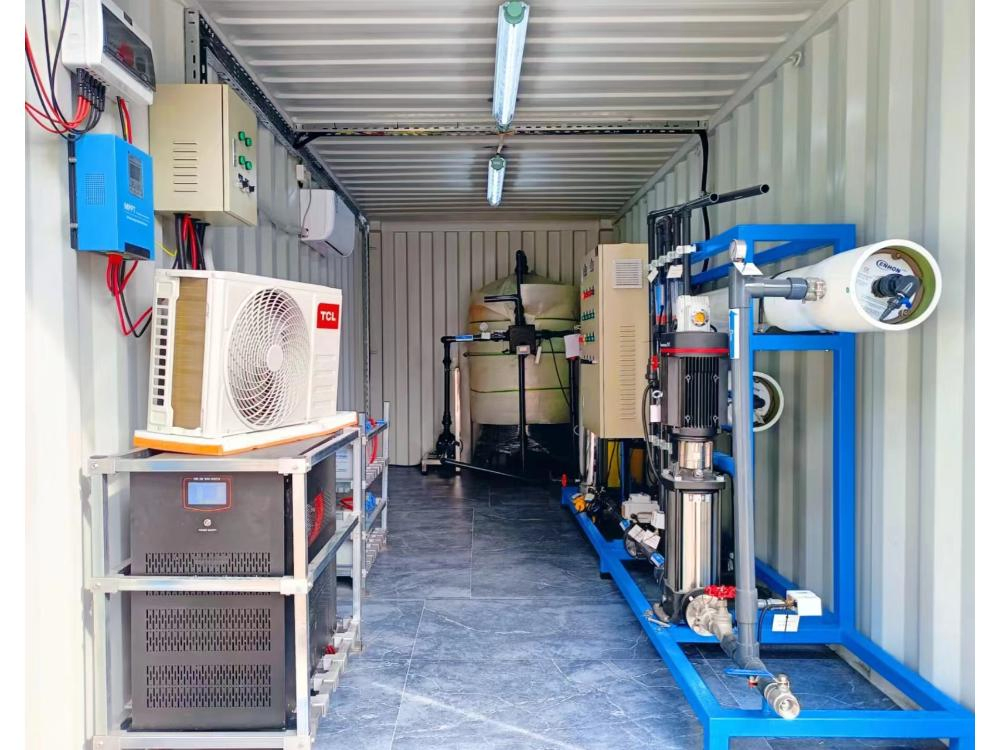
🔹 Main Components
| Part |
Component |
Function |
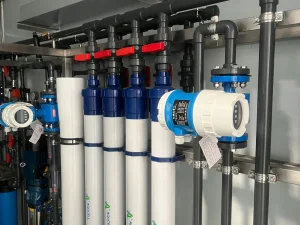
| Pre-treatment | Sand & Carbon Filter | Remove particles, color, chloride, and organics. |
| Anti-scalant System | Prevent membrane scaling and blockages. |
| Precision Filters (5μm/1μm) | Remove microscopic colloids. |
| Main RO Unit | High Pressure Pump (SS316L) | Provide pressure for the RO process. |
| RO Membranes | Over 98% desalination rate; removes ions. |
| Control Panel (PLC/HMI) | Automated operation and monitoring. |
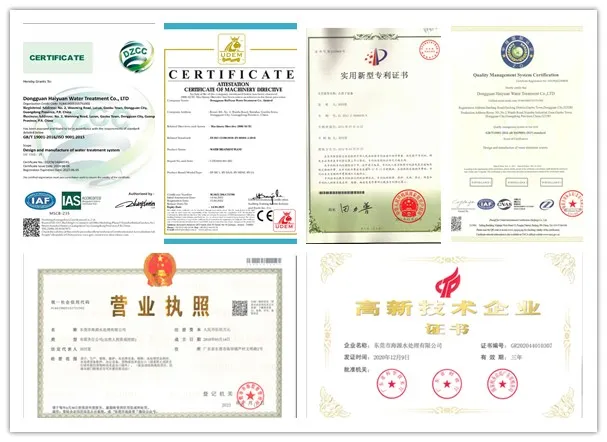
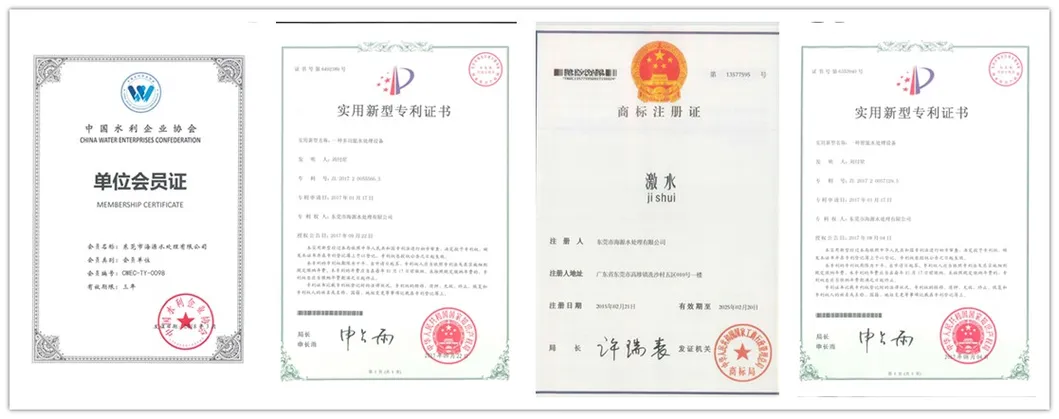
🔹 Product Certification & Gallery
❓ Frequently Asked Questions
1. Can the solar RO system work at night or on cloudy days?
Yes, our systems can be equipped with battery storage to store excess energy generated during the day, or they can be designed as hybrid systems that switch to a generator or grid power when sunlight is insufficient.
2. What is the typical lifespan of the RO membranes?
With proper pre-treatment and regular maintenance (CIP cleaning), the RO membranes typically last between 2 to 3 years depending on the raw water quality.
3. How often do the pre-treatment filters need to be cleaned?
The sand and carbon filters are usually equipped with automatic or manual backwash valves. Depending on water turbidity, backwashing is typically done every 1-3 days.
4. Is the containerized system easy to move to different locations?
Yes, the entire system is built within a standard 20FT or 40FT shipping container, making it highly portable and easy to transport via truck or ship. It is "plug-and-play" once on site.
5. Can this system handle extremely high salinity (TDS over 40,000ppm)?
Absolutely. We use specialized high-pressure seawater membranes and SS316L stainless steel components specifically designed for high-salinity environments like the Arabian Sea or Red Sea.
6. What information is needed for a customized quote?
Please provide your source water type (seawater or well water), the desired output capacity (Liters per hour), the intended use of the treated water, and your local power supply specifications.
 KS Housing